


The “Hidden” ROI: Why Your Security Budget is Leaking Cash (And How to Plug It)
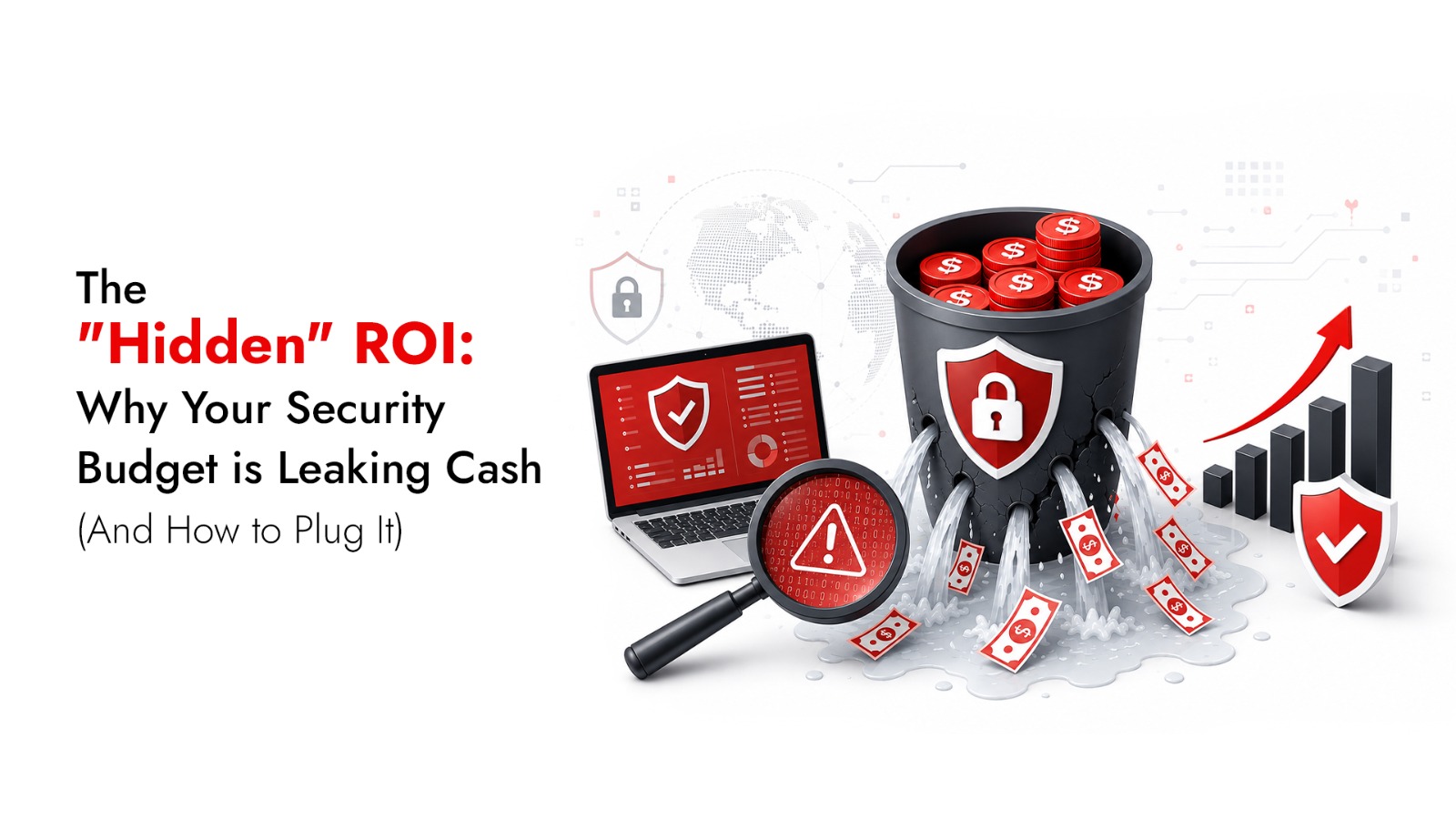
In the boardroom of 2026, the conversation around cybersecurity has shifted. It’s no longer just about “are we safe?” It’s about “why is this so expensive?” For many mid-market firms, the security budget has become a sprawling, tangled web of line items. You have a subscription for your firewall, a per-user fee for your MFA, a contract for your endpoint protection, and a separate bill for your cloud backup. Meanwhile, sitting quietly in your procurement folder is a Microsoft 365 E3 or E5 agreement that, on paper, is supposed to do half of those things already.
This is the “Complexity Tax.” It is the silent killer of security ROI, and if you aren’t careful, it’s making your organization both poorer and less secure.
The “Shelfware” Scandal: Paying Twice for the Same Lock
The reality of 2026 is that most organizations are “tool rich but capability poor.” We see it every day: a company pays for a premium Microsoft E5 license, which includes enterprise-grade tools like Entra ID Governance, Defender for Endpoint, and Purview, yet they continue to pay for third-party “best-of-breed” solutions that offer the exact same functionality.
Why does this happen? Usually, it’s a relic of a “panic buy” from three years ago. Or perhaps a previous IT director liked a specific interface. But in a high-interest, high-inflation economy, these redundancies are a financial liability.
The Reality Check: Current research shows that organizations often use less than 25% of the security features they are already paying for in their Microsoft licenses. You are essentially paying for a Ferrari but only using it to listen to the radio.
Source: [Gartner/Microsoft Licensing Optimization Trends 2025/2026]
When you pay for overlapping tools, you aren’t just losing money on licensing fees. You are paying a “management tax.” Every extra tool requires:
- A specialized engineer to manage it.
- A separate dashboard to monitor.
- A distinct integration point that can (and will) break.
The Anatomy of the Complexity Tax
Hackers don’t usually “break” into modern networks; they exploit the gaps between tools. This is where the Complexity Tax turns into a security risk. When you have 15 different vendors, your telemetry is fragmented. Your identity tool isn’t talking to your endpoint tool, which isn’t talking to your cloud storage.
- The Integration Gap: In 2026, attackers use AI to find the “seams” in your stack. If your third-party MFA doesn’t perfectly sync with your Microsoft Entra conditional access policies, there is a millisecond of opportunity. Industrialized AI cybercrime thrives in these milliseconds.
- The Talent Drain: We’ve discussed the global talent gap, currently sitting at 3.5 million unfilled roles. If you have a small team, do you want them to be experts in ten different security consoles, or do you want them to master one unified ecosystem? Complexity forces your best people to spend 60% of their time “managing vendors” instead of hunting threats.
- The “Alert Fatigue” Multiplier: When every tool in your stack is screaming for attention, nothing is urgent. Overlapping tools often fire duplicate alerts for the same event, burying the one “critical” signal under a mountain of “medium” noise. By the time your team de-duplicates the data, the attacker has already moved laterally.
Mining the “E5 Gold Mine”
The most effective way to increase your ROI in 2026 isn’t to buy a new tool, it’s to extract the value from the ones you already own. At Cyber1Armor, we specialize in what we call “Technology Rationalization.” We help you look at your Microsoft entitlements and ask the hard questions:
- Endpoint Protection: Why are you paying for a separate antivirus when Microsoft Defender for Endpoint is consistently rated as a leader in the Gartner Magic Quadrant?
- Identity Governance: You’re paying for Entra ID (Azure AD). Are you using its “Just-in-Time” access features to kill standing privileges, or are you paying a third party for basic PAM?
- Data Loss Prevention (DLP): Microsoft Purview can track sensitive data across your entire cloud. Why is there a separate legacy DLP bill on your desk?
By consolidating these functions into the Microsoft ecosystem, you don’t just save on licenses; you create a Unified Identity Fabric. This allows for “XDR”, Extended Detection and Response, where every part of your stack actually shares intelligence in real-time.
The Strategic Pivot: From “Tools” to “Outcomes”
If you want to stop paying the Complexity Tax, you have to stop thinking about security as a collection of products. You have to think about it as a design outcome. A “tool-first” approach looks like this: “We need a tool for phishing, a tool for the cloud, and a tool for our laptops.”
A “resilience-first” approach looks like this: “We need to ensure that no identity, human or machine, can access our data without continuous verification.”
The latter approach almost always leads back to the Microsoft stack you already own. But owning the stack isn’t enough. You need the expertise to configure it, harden it, and monitor it 24/7. This is where the “Managed” part of Managed Services becomes your greatest cost-saver.
Did You Know? The average cost of a data breach in 2026 has climbed to $4.88 million. A significant portion of that cost comes from the time it takes to identify the breach, time that is lost when teams are toggling between disconnected dashboards.
Source: [IBM Cost of a Data Breach Report 2026]
How Cyber1Armor Delivers the “Hidden” ROI
We don’t just sell you a service; we act as the “engine” for your existing investments. Our process for eliminating the Complexity Tax is straightforward:
- The Entitlement Audit: We map your current Microsoft licenses against your third-party spend. We find the “Shelfware” and identify exactly where you are paying twice for the same protection.
- The Rationalization Roadmap: We create a plan to migrate your security functions into a unified Microsoft environment (Sentinel, Defender, Entra). This usually pays for itself in license savings alone within the first 12 months.
- Continuous Hardening: We don’t just “set it and forget it.” As Microsoft releases new features (which happens almost weekly in 2026), we ensure your configuration evolves so you don’t fall victim to “Configuration Drift.”
- Expert Oversight: We provide the “Human-in-the-Loop” that Microsoft tools need to be effective. We turn the firehose of Sentinel data into actionable intelligence, so you can stop managing tools and start managing your business.
The Bottom Line
In 2026, the most secure organizations aren’t the ones with the biggest pile of tools; they are the ones with the most disciplined architecture. Stop letting your security budget leak out through redundant vendors and disconnected dashboards. It’s time to extract the full value of the “Gold Mine” you’re already paying for.
Is your security stack a source of resilience or a source of waste? Let Cyber1Armor help you find the answer.